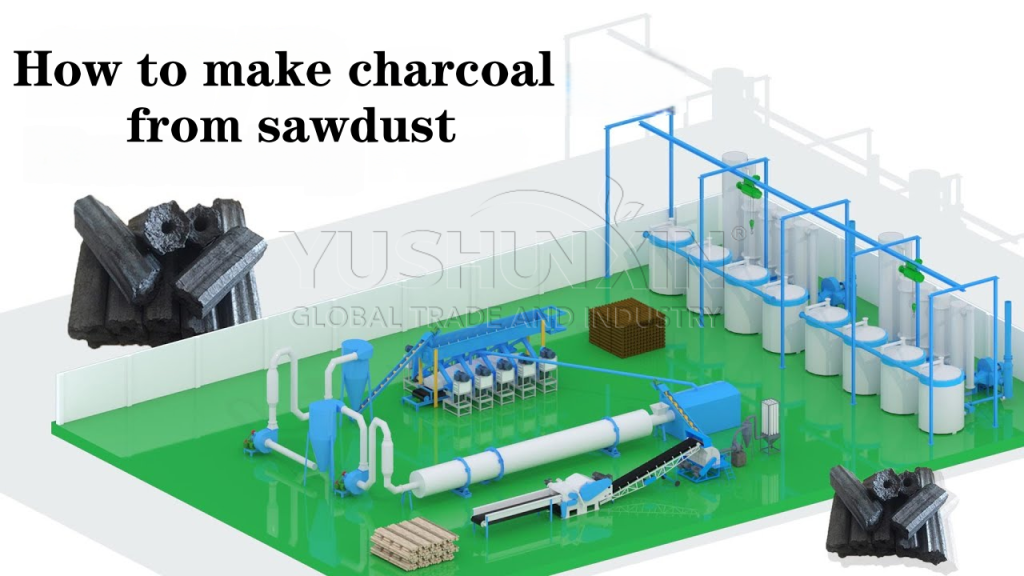
The cost to set up a sawdust charcoal briquette production line depends mainly on capacity (kg/h or tons/day), the level of automation, and whether you’re producing charcoal briquettes (carbonized material) or biomass briquettes (non-carbonized). A true sawdust charcoal briquette line typically includes drying, carbonization (or a charcoal source), crushing, mixing with binder, briquetting, and drying/curing again. Because it involves more stages than a simple briquette press setup, the investment can vary widely—from small workshop lines to industrial plants.
Equipment Costs by Scale (Typical Ranges)
For a small-scale line (roughly 300–800 kg/h), a basic setup may cost about $20,000–$80,000, especially if some steps are manual (feeding, bagging) and you use a simpler dryer. A mid-size line (around 1–3 tons/hour) often lands in the $80,000–$250,000 range, with more robust drying, better dust control, and more continuous operation. A large industrial line (3–10+ tons/hour) can run $250,000 to $1M+, particularly if you add automated conveying, PLC controls, high-efficiency carbonization units, and full emissions treatment.
The Biggest Cost Drivers: Drying and Carbonization
Drying is frequently the largest single expense because sawdust must reach a stable moisture level (often near 8–12%) for consistent briquetting. Rotary dryers, hot air systems, burners, and heat recovery can quickly add cost. Carbonization equipment—such as continuous carbonizers or larger batch kilns—also changes the budget dramatically, especially when local regulations require gas cleaning, afterburners, or particulate filtration. If you already have a reliable charcoal supply, you can reduce upfront costs by skipping carbonization and focusing on briquetting.
Hidden Costs Beyond Machines
A realistic budget must include land and building, concrete foundations, electrical upgrades, and installation labor. You’ll also need spare parts, molds, packaging equipment, and basic lab tools to check moisture and briquette strength. Utilities (electricity, water, fuel for dryers), labor, and maintenance can be substantial operating costs. Shipping, import duties, and local certification requirements may add 10–30% on top of equipment pricing.
Practical Budgeting Tip
To estimate your cost accurately, start with a target output (tons/day), local sawdust moisture and availability, and the briquette type/shape you want. Then request a line proposal listing each machine, power rating, footprint, and optional modules (dust collection, automation, emission control). This approach prevents underspending on critical steps—especially drying—and helps you compare suppliers on more than just the briquette press price. Visiting: https://www.char-molder.com/product/sawdust-briquette-charcoal-making-machine/
Leave a Reply