When planning to invest in a complete sawdust charcoal briquette production line, one of the most common questions from buyers is: what equipment is actually included? A well-designed plant is not just a single machine — it is an integrated system that ensures stable feeding, efficient carbonization, uniform briquetting, and high-quality final charcoal products.
Below is a detailed breakdown of the essential equipment included in a complete sawdust charcoal briquette making plant.
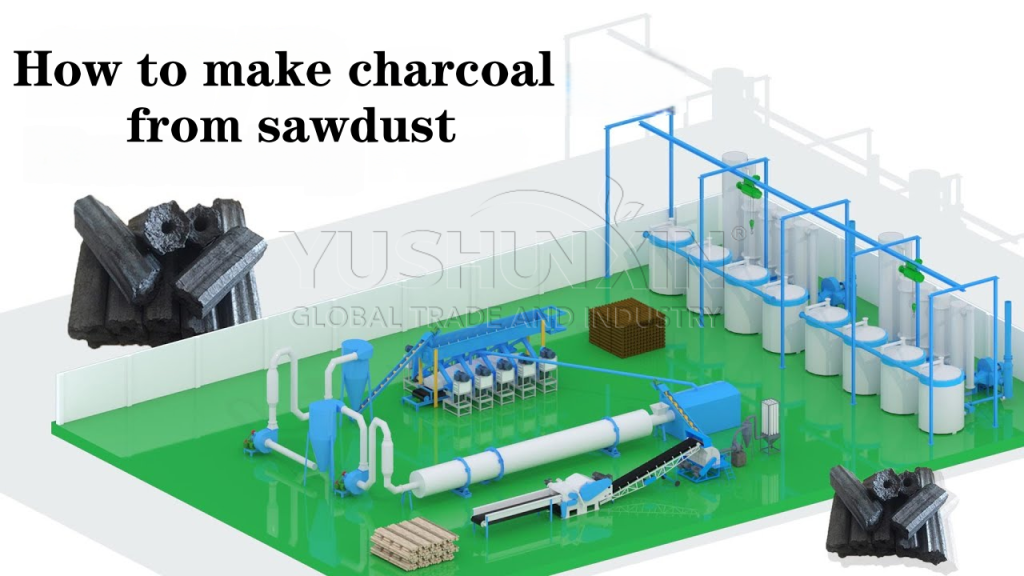
1. Raw Material Crushing and Preparation System
Before carbonization, raw materials such as sawdust, wood chips, rice husk, or coconut shell must meet specific size requirements.
A wood crusher or hammer mill is typically used to reduce larger wood pieces into uniform sawdust (usually below 5mm). Uniform particle size ensures better carbonization efficiency and stable briquette density later in the process.
If the raw material moisture content exceeds 15%, a rotary drum dryer is required to reduce moisture to around 8–12%, which is ideal for briquetting and carbonization. Proper drying directly affects briquette strength and final charcoal quality.
2. Briquetting Machine (Sawdust Briquette Press)
The briquetting machine is the core equipment of the plant. It compresses sawdust under high temperature and pressure to form solid biomass briquettes (often hexagonal or cylindrical with a central hole).
Common models include mechanical stamping briquette machines and screw-type briquette extruders. These machines ensure high density and consistent shape, which is crucial for achieving efficient carbonization results.
3. Carbonization Furnace
After briquetting, the biomass sticks are fed into a carbonization furnace. Modern plants usually adopt a continuous carbonization furnace or airflow carbonization system.
During this process, biomass briquettes are heated in an oxygen-limited environment at temperatures ranging from 400–600°C. Volatile gases are released and can be recycled as fuel to reduce energy consumption.
Compared to traditional earth kilns, continuous carbonization systems offer:
- Higher charcoal yield
- Cleaner emissions
- Stable temperature control
- Continuous production capacity
4. Cooling and Discharging System
After carbonization, charcoal must be cooled before packaging. A sealed cooling conveyor or water-cooling system prevents spontaneous combustion and protects product integrity.
This step ensures the charcoal reaches safe handling temperatures before storage or packing.
5. Charcoal Briquette Shaping (Optional)
If the goal is to produce BBQ charcoal briquettes or pillow-shaped charcoal, additional equipment is required, such as:
- Charcoal crusher
- Wheel mixer
- Charcoal briquette ball press machine
- Drying oven
This system further processes carbonized charcoal into market-oriented shapes.
6. Auxiliary Systems
A complete sawdust charcoal briquette plant may also include:
- Belt conveyors
- Control cabinet
- Dust removal system
- Packaging machine
These components improve automation, environmental compliance, and labor efficiency.
Final Thoughts
A complete sawdust charcoal briquette making plant is a carefully coordinated production system. From raw material preparation to final packaging, each piece of equipment plays a crucial role in product quality, operational efficiency, and profitability.
For investors aiming to enter the biomass charcoal market, selecting the right configuration based on capacity requirements (500kg/h, 1 ton/h, or higher) is essential for long-term success. Visiting: https://www.char-molder.com/product/sawdust-briquette-charcoal-making-machine/
Leave a Reply